


Mastering Fly Fishing in White County: Fly Fishing Techniques Guide

Fly fishing in White County offers a unique experience. The streams and rivers here provide excellent opportunities to catch trout. I have spent many days learning and refining my skills in this area. This guide shares practical tips and techniques to help you master fly fishing in White County.
Essential Fly Fishing Techniques Guide for White County Waters
Fly fishing requires specific techniques to be effective. First, understanding the gear is crucial. A lightweight rod, a reel with a smooth drag system, and the right fly line make a difference. I recommend starting with a 5-weight rod for most trout fishing in White County.
Casting is the foundation of fly fishing. The basic cast involves a smooth back and forward motion. Practice this on land before heading to the water. When you reach the stream, observe the current and adjust your cast length accordingly. Shorter casts work well in tight spaces, while longer casts cover more water.
Presentation is key. The fly should land gently on the water to avoid spooking fish. Use a mend to adjust the line and reduce drag. This helps the fly drift naturally with the current. I often use dry flies early in the morning and switch to nymphs or streamers as the day warms.
Reading the water is another important skill. Look for seams where fast and slow water meet. Trout often hold in these spots. Pools, riffles, and undercut banks are also good places to cast. Move quietly and avoid sudden movements to increase your chances of a strike.
Why Can't You Touch Trout with Dry Hands?
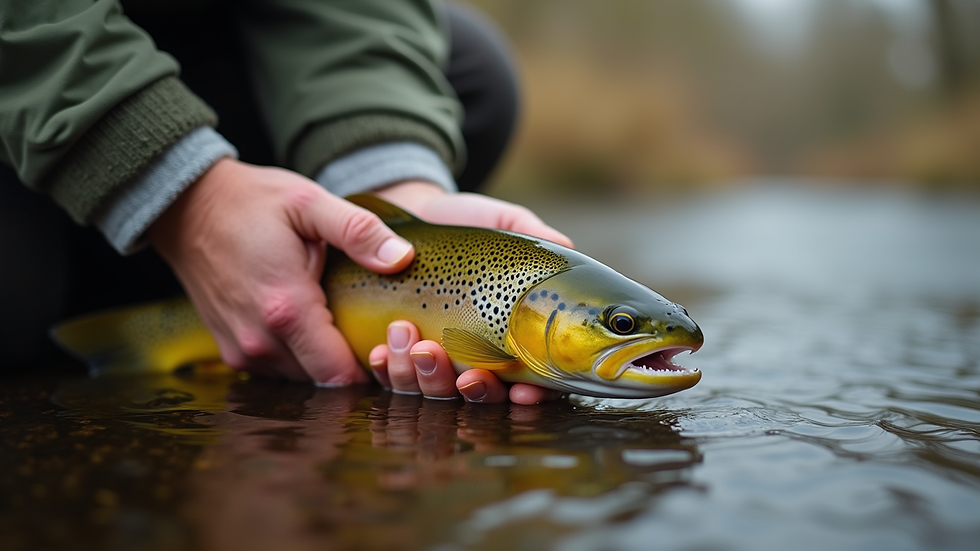
Handling trout requires care. Trout have a protective slime coating on their skin. This slime helps prevent infections and keeps the fish healthy. When you touch a trout with dry hands, you remove this slime. This can harm the fish and reduce its chances of survival after release.
Always wet your hands before handling a trout. This simple step protects the fish. Use a gentle grip and avoid squeezing. If possible, keep the trout in the water while removing the hook. Use barbless hooks to make release easier and less stressful for the fish.
I carry a small container of water to wet my hands if the stream water is too cold or dirty. This practice shows respect for the fish and the environment. It also helps maintain the quality of the fishing experience for others.
Choosing the Right Flies for White County Trout
Selecting the right fly is essential. White County trout feed on various insects depending on the season. Early spring calls for stoneflies and midges. Summer brings mayflies and caddisflies. Late fall often requires nymph patterns.
I keep a selection of flies in my box to match these hatches. Popular dry flies include the Adams, Elk Hair Caddis, and Blue Wing Olive. For nymphs, I use Pheasant Tail and Hare’s Ear patterns. Streamers like Woolly Buggers work well for larger trout.
Observe the insects on the water before you start fishing. Matching the hatch increases your chances of success. If you see trout rising, try to identify the insect they are feeding on and select a similar fly.
Best Spots for Fly Fishing in White County
White County has many excellent fishing locations. The Toccoa River is a favorite. It offers clear water and a healthy trout population. The river has both fast runs and deep pools, providing diverse fishing conditions.
Another great spot is Smith Creek. It is smaller and more secluded. This creek is ideal for beginners or those who prefer a quiet fishing experience. The trout here are often less pressured, making them easier to catch.
For guided trips, I recommend checking out coldwaters fly fishing white county. They offer access to private waters and expert guidance. This can help you improve your skills quickly and enjoy a productive day on the water.
Tips for Catch and Release to Protect Trout Populations
Catch and release is important to maintain healthy trout populations. When you catch a trout, handle it carefully as described earlier. Use barbless hooks to reduce injury. Avoid keeping the fish out of water for more than a few seconds.
Release the trout gently back into the water. Hold it facing upstream until it swims away on its own. This helps the fish recover and reduces stress. Avoid fishing in very warm water, as trout are more vulnerable to stress in these conditions.
By practicing responsible catch and release, you help preserve the fishery for future anglers. It also supports the natural balance of the ecosystem in White County.
Preparing for Your Fly Fishing Trip in White County
Preparation is key to a successful trip. Check the weather forecast and dress accordingly. Layered clothing works best for changing conditions. Bring polarized sunglasses to reduce glare and see fish more clearly.
Pack essential gear such as extra leaders, tippet, and flies. A small first aid kit and insect repellent are also useful. Don’t forget a fishing license, which is required in Georgia.
Plan your trip around the best fishing times. Early morning and late afternoon are usually the most productive. Avoid fishing during the hottest part of the day when trout tend to be less active.
Mastering fly fishing in White County takes practice and patience. By using the right techniques, respecting the fish, and choosing the best spots, you can enjoy rewarding fishing experiences. Whether you are new to the sport or looking to improve, these tips will help you catch more trout and appreciate the beauty of North Georgia’s waters.


Comments